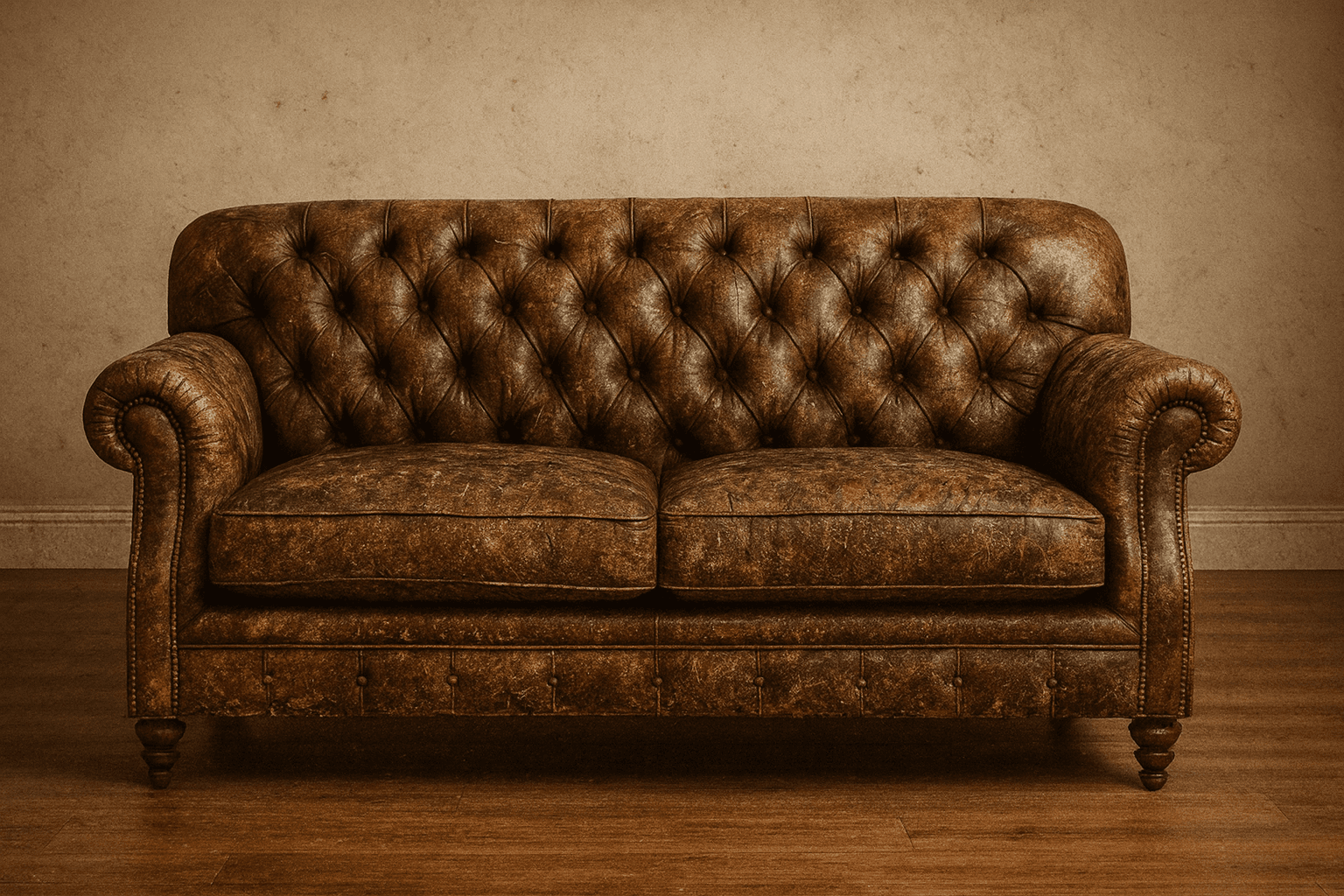
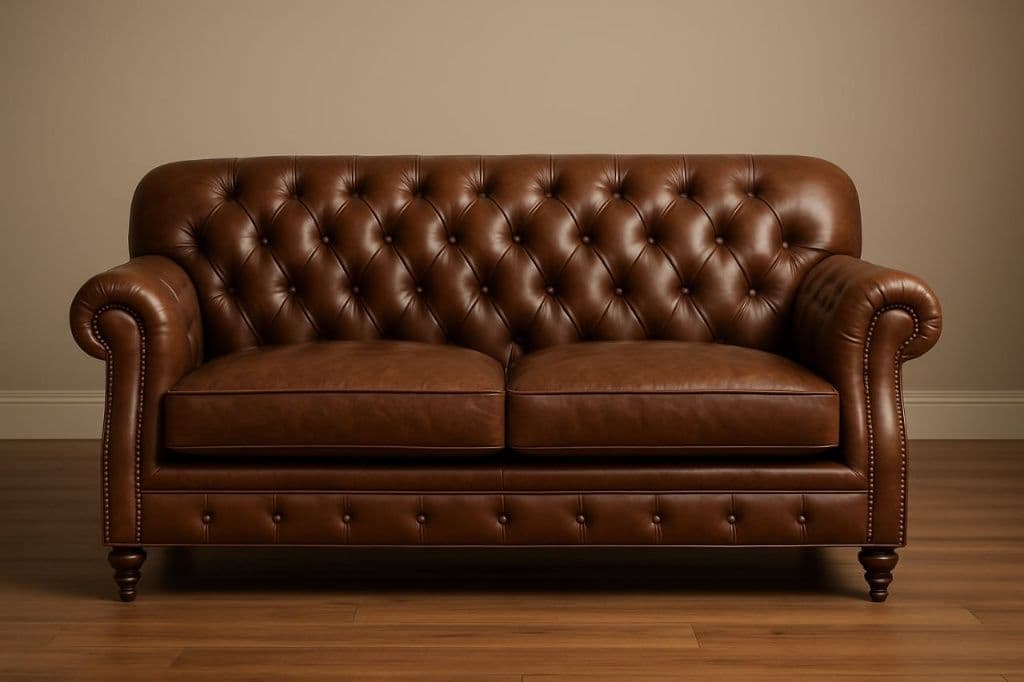

A worn leather sofa does not automatically need new upholstery. The right solution depends on what is failing: the surface finish, the leather itself, a sewn panel, the cushion filling, or the frame and support below it. Looking at those layers separately helps Austin homeowners avoid both an incomplete repair and unnecessary replacement of material that is still serviceable.
This guide combines the practical decision points from our two earlier repair-or-reupholster articles into one page. It explains what can often be restored, when replacement material is the more realistic path, and what information is needed for an initial assessment. A final recommendation still depends on clear photos and the condition of the individual piece.
Start With the Material, Not Just the Appearance
Cracking, flaking, fading and sagging can look similar in a quick photo, but they do not always have the same cause. Pigmented leather has a protective color and finish system at the surface. Aniline and other absorbent leathers behave differently because color and oils interact more directly with the hide. Bonded or heavily coated materials can peel when their manufactured surface layer fails. A treatment that is appropriate for one material may be ineffective or visually wrong on another.
Before deciding between repair and reupholstery, identify whether the visible problem is limited to the finish, extends into the leather, or comes from the structure underneath. Cleaning cannot rebuild missing finish, color alone cannot close an open tear, and new foam will not correct a broken support system. The diagnosis should match the layer that has actually failed.
When Targeted Leather Repair Is Usually the Better Fit
Repair aims to preserve the original upholstery and correct a defined problem area. It is most suitable when the surrounding leather remains flexible and stable, the damage is limited, and a repair can be blended into the existing surface without pretending the entire piece is new.
- Scuffs, scratches and worn color in high-contact areas.
- Small punctures, cuts or tears that have not spread across a large panel.
- Sun fading or uneven color where the leather itself remains usable.
- Localized staining after the material and stain type have been assessed.
- Sagging cushions when the covers are sound and the filling or support can be rebuilt separately.
A proper repair may include cleaning, stabilizing damaged edges, filling or reinforcing the area, matching color, rebuilding the finish and sealing it where the leather type calls for that process. The order matters. Covering an unrepaired crack with color can leave the underlying damage active and allow it to show again where the furniture flexes.
Localized work also has limits. Texture, grain, age and light exposure affect how closely a repaired area can blend. The goal is a durable, visually compatible result, not a claim that every repair will be invisible under every light and viewing angle.
When Reupholstery Becomes the More Realistic Option
Reupholstery replaces the covering rather than rebuilding only the damaged surface. The old material is removed, patterns are taken from the existing upholstery, new covers are cut and sewn, and the piece is rebuilt. This work is normally handled in the workshop because it requires disassembly, sewing and access to the frame and support system.
- Cracking, brittleness or material failure extends across several large areas.
- A panel is too damaged to support a durable localized repair.
- Bonded or coated material is peeling across multiple seating surfaces.
- Several covers, seams, cushions or support components need to be rebuilt together.
- The owner wants a different upholstery material, color or overall style.
- The frame, proportions or personal value make keeping the existing piece worthwhile.
Reupholstery is not automatically the right answer for every worn sofa. The frame and construction should justify the work, the intended material must be appropriate for upholstery use, and the scope must include any cushion or support problems that would remain after new covers are installed. In some cases, replacing only a failed panel is possible; in others, partial replacement would create an obvious mismatch or move the failure to the next weak area.
Do Not Confuse a Cushion Problem With a Leather Problem
A seat can look badly worn because the cushion has collapsed, even while the leather cover remains repairable. Foam density, fiber wrap, inserts, webbing, springs and other support components all influence shape and comfort. Rebuilding the cushion and correcting the support underneath can restore the profile without replacing good upholstery.
The opposite is also possible: new foam alone will not solve a cover that has become brittle, split at a seam, or stretched beyond a usable pattern. For this reason, photos should show both the full piece and the cushion or support problem from several angles. Removable cushions may also need photos with the insert taken out.
Six Questions That Guide the Decision
- Is the damage localized to one area, or repeated across the furniture?
- Is the surrounding leather still flexible, or is it brittle and failing?
- Is the visible issue in the finish, the hide, a seam, the cushion, or the frame?
- Can a repaired or replaced section be matched appropriately to the remaining material?
- Does the frame and overall construction justify preserving the piece?
- Is the goal to correct specific damage or to change the entire material and appearance?
If the structure is solid, the original leather is largely sound and the damage is confined, repair is often the logical first option. If the covering is failing across the piece, multiple components need rebuilding, or the owner wants a complete material change, reupholstery deserves consideration. Sometimes the best scope combines methods—for example, cushion rebuilding with localized color restoration, or a replacement panel followed by blending work on adjacent leather.
What Affects the Scope of the Work
We do not publish a universal price because two sofas that look similar in one photo can require very different work. The estimate depends on the furniture size and construction, the number and location of damaged areas, material type, color-matching requirements, sewing and disassembly, cushion and support condition, access to the piece, and whether suitable leather or fabric must be ordered.
Timing varies for the same reason. Many localized repairs can be completed as mobile service in the home. Full reupholstery, extensive sewing, panel fabrication and major rebuilding generally require workshop time. Parts or special-order upholstery material can also affect scheduling. The expected setup and timeframe should be confirmed after the project is reviewed.
What to Send for a Useful Photo Assessment
Start with one well-lit photo of the entire piece. Add close-ups of each damaged area and a medium-distance photo showing where that damage sits on the furniture. For peeling, cracking or fading, include more than one angle so the surface and extent are clear. For sagging, photograph the seat from the front and side and show removable cushions separately when possible.
- Your ZIP code and whether the furniture is in a home, office, RV or other relevant setting.
- A short description of what changed and how quickly it developed.
- Any known information about the material, manufacturer or previous repair.
- Photos of labels or removable covers when they help identify construction or material.
Clear photos are often enough for an initial written estimate. If material, internal damage or construction cannot be evaluated reliably from photos, we will explain what needs to be checked before the scope is confirmed.
Care After Repair or Reupholstery
Keep leather away from prolonged direct sunlight when practical, remove dust with a soft dry cloth, and avoid household wipes or cleaners that were not selected for the material. Spills should be blotted rather than scrubbed. Conditioning is not a universal fix: the product and frequency should match the leather type and finish. After service, follow the care guidance provided for that specific piece.
Repair or Reupholster Your Furniture in Austin
L3Xpro evaluates leather furniture repair, color restoration, cushion restuffing and full reupholstery for Austin-area homes. The recommendation starts with the condition of the piece and the work it actually needs. Send photos of the full furniture, the damaged areas and your ZIP code to request an assessment and written estimate.